

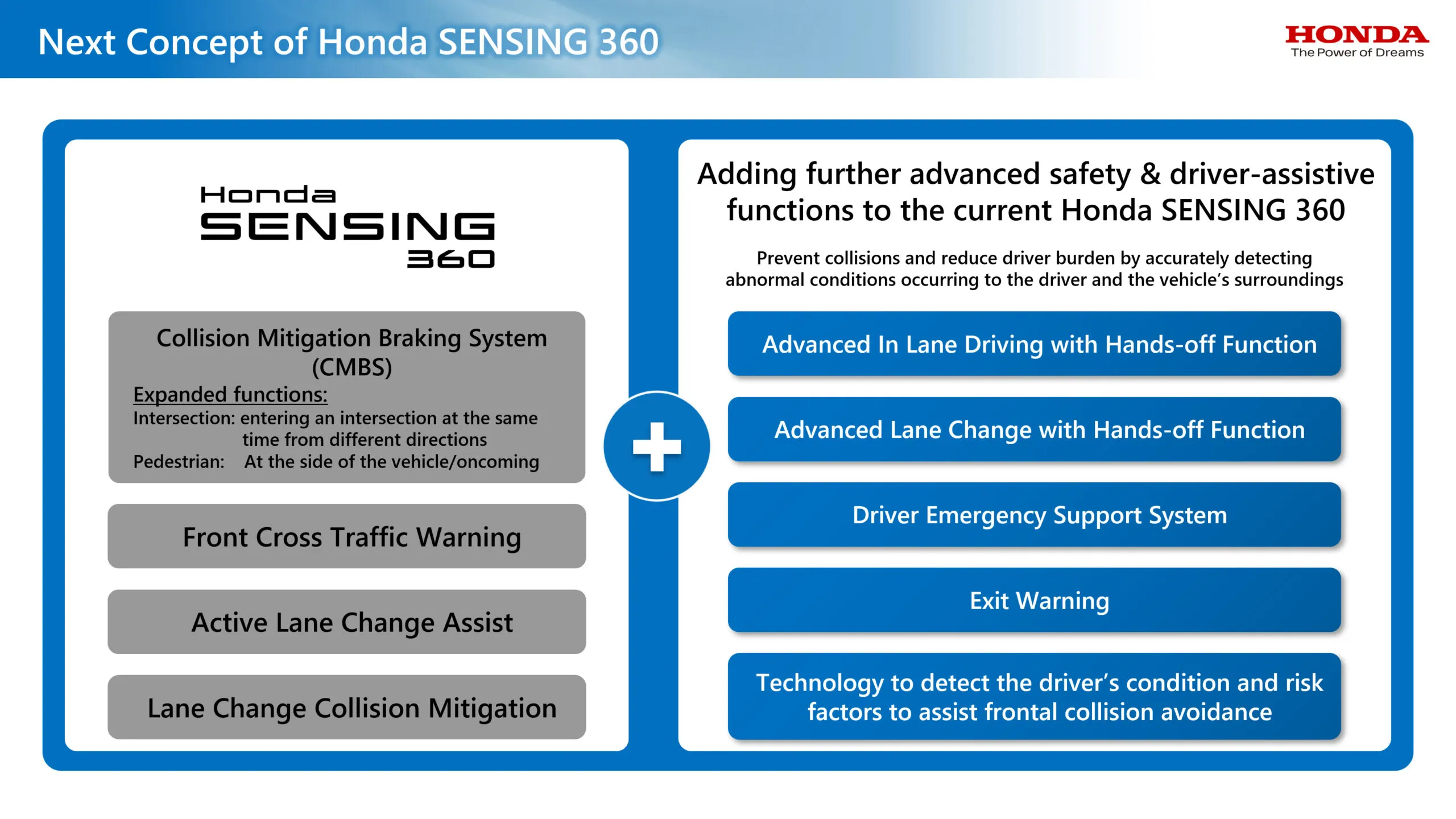
The 2026 lineup of Honda vehicles incorporates the latest advancements in driver-assist technology through the Honda Sensing suite, a comprehensive package designed to enhance safety and prevent accidents. This system integrates several cutting-edge features that work together to provide drivers with increased awareness, automated responses, and improved control under various driving conditions. At Piedmont Honda, serving the Anderson community and neighboring cities such as Greenwood and Clemson, we prioritize equipping drivers with vehicles that offer these advanced safety technologies to promote confidence on the road.
Honda Sensing is a suite of intelligent safety and driver-assistive technologies standard or available across most 2026 Honda models, including popular vehicles like the CR-V, Civic, and the new HR-V. Its core components include Collision Mitigation Braking System (CMBS), Road Departure Mitigation System (RDM), Adaptive Cruise Control (ACC) with Low-Speed Follow, and Lane Keeping Assist System (LKAS). Together, these features actively monitor the vehicle's surroundings and driver inputs to help reduce the risk of collisions and maintain safe driving practices.
The Collision Mitigation Braking System utilizes a forward-facing camera and radar sensors to detect potential frontal collisions. When the system senses an imminent impact with a vehicle or pedestrian, it automatically alerts the driver with audio and visual warnings. If the driver does not respond in time, CMBS can apply moderate braking force to help mitigate the severity of the collision or avoid it altogether. This is particularly valuable in congested traffic environments common in Greenville and Easley, where sudden stops are frequent.
Complementing CMBS is the Road Departure Mitigation System, which helps prevent unintentional lane departures — a critical feature for drivers navigating highways or rural roads in Abbeville or Centerville. RDM uses lane-keeping technology to detect if the vehicle is veering off the road without signaling and can provide steering assistance and brake input to keep the car within its lane or prevent it from leaving the roadway entirely.
Adaptive Cruise Control with Low-Speed Follow enhances traditional cruise control by maintaining a set speed while automatically adjusting to the speed of the car ahead, including coming to a complete stop if necessary. This feature reduces driver fatigue during long commutes or highway driving, common among those traveling between Anderson and Hartwell, GA. Low-Speed Follow ensures smooth acceleration and braking in traffic jams, keeping a safe distance without constant driver intervention.
Lane Keeping Assist System actively monitors lane markings and provides gentle steering assistance to help the driver stay centered within the lane. When combined with other safety features, LKAS contributes to reducing driver errors caused by distraction or drowsiness. This system is supported by a high-resolution camera mounted near the rearview mirror, continuously scanning the road for lane boundaries.
Additional elements in the Honda Sensing suite include Traffic Sign Recognition, which identifies important road signs such as speed limits and alerts the driver accordingly, and Forward Collision Warning, which provides early alerts of potential hazards ahead. The system’s integration with intelligent driver alerts and automatic interventions creates a multi-layered safety net that addresses diverse driving scenarios.
The 2026 Honda models also benefit from enhancements to sensor technology and processing capabilities, allowing for faster detection and more precise responses. These improvements reflect Honda’s commitment to aligning with the highest industry safety standards and responding to real-world driving demands in cities like Greenwood and Anderson, where a mix of urban and suburban driving conditions exists.
For drivers interested in exploring the latest Honda safety technologies, Piedmont Honda offers extensive model research and expert guidance. Whether considering the new HR-V or the versatile CR-V, customers can learn about unique safety features tailored to their lifestyle and driving habits. Our team can also assist with financing options through the Get Pre-Approved - Credit Application and provide information on special programs such as the Honda college graduate program.
Experience the comprehensive safety benefits of the 2026 Honda Sensing suite firsthand by visiting Piedmont Honda. Drivers from Anderson, Clemson, and surrounding communities are invited to explore our New Honda Inventory and discover how these advanced systems contribute to safer journeys. For easy directions to our dealership, click our location and schedule a test drive today.
Table of Contents
- The Role and Advantages of Honda's Advanced Compatibility Engineering Body Structure
- Top 2026 Honda Models Honored with IIHS Top Safety Pick Awards
- Comparing Safety Technologies: Honda Sensing vs Toyota Safety Sense 3.0
- Safety Feature Comparison Between 2026 Honda CR-V and Civic Models
- Customizing Honda Sensing Features and Understanding Sensor Recalibration Costs
The Role and Advantages of Honda's Advanced Compatibility Engineering Body Structure
Honda's Advanced Compatibility Engineering (ACE) body structure is a cornerstone of the brand’s commitment to occupant safety and crash protection. This innovative engineering design enhances the vehicle's ability to absorb and distribute collision forces, reducing the likelihood of injury to occupants. Unlike traditional body designs that focus impact energy into specific areas, ACE employs a network of interconnected structural elements that work together to manage crash energy more effectively.
The ACE body structure uses a combination of high-strength steel and carefully engineered frame geometry to direct crash energy away from the passenger compartment. This multi-directional load path disperses forces through multiple zones, protecting occupants by minimizing cabin deformation during front, side, and offset collisions. For drivers in communities like Greenwood or Easley, where varying road conditions can lead to unexpected impacts, this technology provides an additional layer of assurance.
One significant advantage of ACE is its compatibility with other vehicles on the road. The design aims to improve compatibility between different vehicle types and sizes during collisions, reducing the risk of severe damage or injury. For example, in crashes involving SUVs and smaller cars, ACE helps balance the impact forces so both vehicles’ occupants benefit from enhanced protection. This is especially relevant for drivers around Greenville or Hartwell, where diverse vehicle types share the roads.
Moreover, the ACE structure supports Honda’s advanced safety systems by providing a robust foundation for sensors and components integral to driver assistance features. The strength and precision of the body frame ensure that sensors for systems like Honda Sensing operate optimally, maintaining their accuracy and reliability after minor collisions or repairs.
For Anderson residents considering a used vehicle, it's important to note that the ACE structure’s effectiveness depends on the vehicle’s condition. Choosing a car with a well-maintained or factory-original frame is crucial, and browsing our Pre-Owned Inventory - Used Cars For Sale In Anderson can help locate models that retain these safety advantages.
Routine maintenance also plays a vital role in preserving the integrity of the ACE body structure. Utilizing services such as our oil change coupon ensures that your vehicle’s engine and mechanical systems remain in top shape, indirectly supporting overall safety by preventing breakdowns that might lead to hazardous situations.
In summary, Honda's Advanced Compatibility Engineering body structure offers significant benefits by enhancing crash energy management, improving vehicle compatibility during impacts, and supporting advanced safety technologies. This innovative design contributes to the high safety standards that drivers in Anderson, Clemson, and nearby areas have come to expect from Honda vehicles.
Top 2026 Honda Models Honored with IIHS Top Safety Pick Awards
In 2026, Honda continues to demonstrate its unwavering commitment to safety with multiple models earning prestigious recognition from the Insurance Institute for Highway Safety (IIHS). Four Honda vehicles have achieved Top Safety Pick (TSP) or higher ratings, underscoring the brand’s integration of advanced safety technologies and robust structural engineering. These accolades highlight Honda’s leadership in delivering vehicles that excel in crashworthiness, crash prevention, and occupant protection.
Among the standout models receiving these honors are the Honda Accord, Accord Hybrid, Passport, and Ridgeline. Each of these vehicles benefits from Honda’s comprehensive safety suite, including the 2026 Honda Sensing system and the Advanced Compatibility Engineering (ACE) body structure. The Accord and Accord Hybrid, popular choices for drivers in Greenville and Greenwood, offer a refined balance of performance, comfort, and top-tier safety features. Their reinforced frames and advanced driver-assist technologies contribute to their superior crash test results and crash avoidance capabilities recognized by IIHS.
The Passport and Ridgeline, designed for those seeking greater utility and ruggedness, also earned top safety marks. These models integrate Honda’s innovative safety systems with a durable chassis engineered to absorb impact forces effectively, providing added protection in various collision scenarios. Their safety performance is especially appreciated by drivers in Anderson and Clemson, where outdoor activities and family transportation demand reliable protection.
Achieving a Top Safety Pick award requires meeting rigorous criteria across multiple testing categories, including small overlap front, moderate overlap front, side impact, roof strength, and head restraint evaluations. Additionally, the effectiveness of crash avoidance technology and headlight performance play critical roles. Honda’s consistent success in these areas is a testament to its focus on combining active and passive safety systems to enhance driver confidence and occupant security.
For vehicle owners in the Anderson area looking to upgrade safely, these IIHS-recognized 2026 Honda models offer peace of mind backed by proven crash protection and advanced safety technologies. To explore options or learn about your current vehicle’s value, consider using our Online trade-in appraisal - Sell Us Your Car tool. Piedmont Honda, recognized as the highest rated dealership in Anderson, is ready to assist you in selecting a vehicle that meets your safety and lifestyle needs.
In summary, Honda’s 2026 lineup continues to set high standards for safety, combining innovative engineering and cutting-edge technology to earn distinguished IIHS safety awards that benefit drivers throughout Anderson, Greenville, and Clemson.
Comparing Safety Technologies: Honda Sensing vs Toyota Safety Sense 3.0
When evaluating advanced safety suites, Honda Sensing and Toyota Safety Sense 3.0 are among the most frequently compared systems due to their comprehensive driver-assist technologies. Both packages aim to enhance collision avoidance, pedestrian detection, and driver awareness, but there are nuanced differences that affect real-world performance and user experience.
Honda Sensing, featured in 2026 Honda models, integrates a robust set of features including Collision Mitigation Braking System (CMBS), Road Departure Mitigation, Adaptive Cruise Control with Low-Speed Follow, Lane Keeping Assist System, and Traffic Sign Recognition. These functions work synergistically using a combination of radar and monocular camera sensors to scan the environment. For example, CMBS actively applies brakes to reduce collision severity or avoid impact, while Lane Keeping Assist gently adjusts steering to help maintain lane positioning. The suite also benefits from Honda’s continuous refinement of sensor calibration and software, contributing to precise responsiveness in various driving conditions common around Anderson and Greenville.
Toyota Safety Sense 3.0 shares many of these core features, such as Pre-Collision System with Pedestrian Detection, Lane Departure Alert with Steering Assist, Dynamic Radar Cruise Control, and Road Sign Assist. However, Toyota’s system additionally emphasizes improved nighttime pedestrian detection and enhanced lane tracing assist that utilizes lane markers and preceding vehicles for smoother highway driving. Despite these sophisticated capabilities, Toyota Safety Sense 3.0’s performance can vary slightly depending on vehicle model and sensor placement, which may influence effectiveness in suburban driving environments like Easley or Clemson.
A key distinction lies in the customizability and user interface. Honda Sensing offers drivers the ability to adjust sensitivity levels for certain alerts and the option to disable some features temporarily, providing a tailored experience. In contrast, Toyota’s system tends to have fewer user adjustments, focusing on default safety protocols optimized by the manufacturer. Moreover, Honda’s integration with the vehicle’s overall safety architecture, including the Advanced Compatibility Engineering body structure, complements the sensor suite, enhancing occupant protection beyond active driver aids.
Both systems require professional recalibration of sensors after repairs or collisions to maintain accuracy, a service Piedmont Honda can expertly provide. Drivers interested in maintaining optimal safety performance should consider scheduling a Schedule Service Appointment to ensure Honda Sensing components are correctly calibrated.
In summary, while Honda Sensing and Toyota Safety Sense 3.0 both deliver comprehensive safety technology, Honda’s system stands out for its adaptability, sensor precision, and integration with structural safety features. Prospective buyers in Anderson and surrounding areas are encouraged to explore these differences further and review common dealership questions to make an informed choice tailored to their driving needs.
Safety Feature Comparison Between 2026 Honda CR-V and Civic Models
The 2026 Honda CR-V and Civic both deliver robust safety features, anchored by the Honda Sensing suite, yet they cater to different driver needs and preferences with unique attributes. Both models incorporate essential technologies such as Collision Mitigation Braking System (CMBS), Road Departure Mitigation (RDM), Adaptive Cruise Control (ACC) with Low-Speed Follow, and Lane Keeping Assist System (LKAS), creating a strong baseline for active safety. However, their application and performance nuances reflect their distinct vehicle classes—compact SUV versus compact sedan.
Structurally, the CR-V benefits from its SUV design, which includes a higher driving position and increased mass, contributing to enhanced visibility and better protection in certain collision scenarios. The Civic, with its sedan profile, excels in maneuverability and crash compatibility, thanks to Honda’s Advanced Compatibility Engineering (ACE) body structure, which is optimized for energy absorption and occupant protection in compact vehicles. This structural difference influences how each model performs in crash tests and real-world impacts, with the CR-V’s elevated stance offering advantages in multi-vehicle collisions, while the Civic’s lower center of gravity supports stability and reduces rollover risk.
When it comes to safety technology performance, both models exhibit high standards in crash prevention. Their Honda Sensing systems use a combination of radar and camera sensors to detect obstacles, lane markings, and other vehicles, activating warnings and automatic interventions when necessary. Notably, the Civic tends to have more refined headlight options that can achieve better ratings in the Insurance Institute for Highway Safety (IIHS) assessments, which is significant for nighttime and low-visibility driving. The CR-V’s higher headlight placement can sometimes cause glare issues for other drivers, depending on the trim and headlight type, making trim selection an important consideration for buyers prioritizing lighting safety.
Both vehicles include pedestrian detection and cyclist recognition within their collision mitigation capabilities, reflecting Honda’s commitment to comprehensive safety in both urban and suburban environments like Greenwood and Easley. Additionally, active lane-centering and adaptive cruise control systems in both models improve highway safety by reducing driver fatigue and maintaining safe following distances.
In terms of occupant protection, the CR-V offers slightly more interior space and advanced airbag configurations tailored for larger cabin environments, which can be advantageous for families from Greenville or Hartwell seeking SUV practicality without sacrificing safety. The Civic’s design prioritizes efficient space utilization and structural integrity that supports its lightweight chassis without compromising crashworthiness.
In summary, while the 2026 Honda CR-V and Civic share many foundational safety technologies, the CR-V offers SUV-specific advantages in size, visibility, and interior protection, whereas the Civic excels in headlight performance and agile crash compatibility. Prospective buyers in Anderson and surrounding areas should consider how these differences align with their driving habits and safety priorities when choosing between these two situations. For more detailed information on the CR-V’s safety features, visit CR-V safety features.
Customizing Honda Sensing Features and Understanding Sensor Recalibration Costs
The Honda Sensing suite in 2026 models offers drivers a flexible approach to safety by allowing customization of many assistive features. Drivers in Anderson and nearby cities like Greenwood and Easley can adjust settings for systems such as Adaptive Cruise Control, Collision Mitigation Braking System, and Lane Keeping Assist via the vehicle’s touchscreen or multi-function steering wheel controls. This adaptability enables users to tailor alerts and interventions to their personal driving style and road conditions, enhancing comfort without sacrificing safety.
For example, sensitivity levels for Forward Collision Warning and Lane Departure Warning can be modified to reduce false alerts on highways or city streets. Additionally, some features can be temporarily disabled when preferred, such as when driving in heavy traffic or inclement weather, but Honda advises keeping safety systems active whenever possible to maintain maximum protection.
After collisions or body repairs, recalibration of Honda Sensing sensors becomes critical to ensure these systems perform accurately. The recalibration process involves professional diagnostic tools and alignment equipment to reset radar, cameras, and ultrasonic sensors. Costs for this service vary based on the model and extent of repairs but typically range between $200 and $600. Proper recalibration is essential for maintaining system reliability, especially for vehicles in Greenville or Clemson where varying driving environments challenge sensor accuracy.
Piedmont Honda’s certified technicians in Anderson provide expert sensor recalibration and can assist customers with any adjustments needed to Honda Sensing technology. For precise calibration and to maintain your vehicle’s safety integrity, scheduling a service appointment is highly recommended. Call us at (864) 305-4173 or visit our dealership for professional support. Get Directions to Piedmont Honda. Also, be sure to check out our Used Cars Under $20,000 for great deals.
